Showing posts with label molecular sieve beads. Show all posts

Monday, 10 September 2018

Things to Know When Purchasing Molecular Sieves.!

Molecular Sieves are used to purify the gas streams & as absorbents to remove the water or decrease the humidity. in our blog post, we are focused on what are the things we need to know while purchasing absorbents.
Molecular Sieves working principles
The raw material s used in an industrial molecular Sieve has slightly small uniform pores. When other materials come in contact with the molecular sieve. The molecules that are the right size to fit the pores will be absorbed. Molecular sizes are measured in angstroms. Pore sizes molecular Sieve3A & molecular Sieve 4A will absorb the water while larges sizes remove larger hydrocarbons.
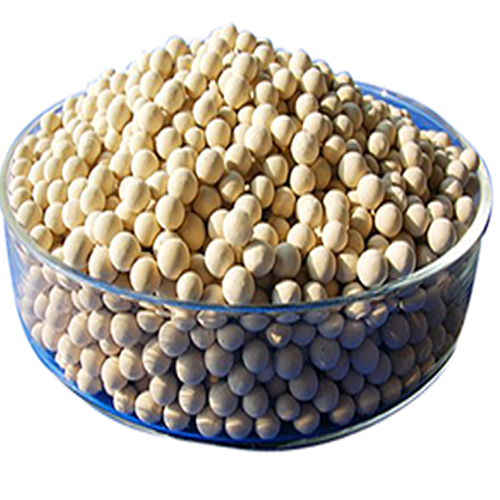
How a Molecular Sieve Works
The material used in an industrial molecular sieve has small uniform pores. When other substances come in contact with the molecular sieve, the molecules that are the right size to fit in the pores will be adsorbed. The molecules that are too large to fit will not. Molecular sieves function at the microscopic level; therefore their sizes are measured in angstroms. Pore sizes 3Å and 4Å will adsorb water while larges sizes remove larger hydrocarbons.


Molecular Sieve using raw Materials
In a strictly scientific sense, many regular desiccant dehumidifiers like lime, clay and silica gel also work by filtering molecules of water vapor, but marketable molecular sieves are made of synthetic crystalline alumina silicates. Unlike absorbents found in nature, the mechanism of pore size during manufacture produces selective adsorption characteristics.
The Benefits of Molecular Sieves
Molecular Sieves adsorbents usually adsorb the water much quicker than other adsorbents & same they can decrease the humidity to a much lower level than the standard silica gel. they are also more effective than natural adsorbents for applications that exceed normal room temperature when correctly used they can be effective in reducing water molecules as low as 1ppm in specialized containers or to 10% comparative humidity in packaging.           
Molecular sieves typically adsorb water much faster than other desiccant air dryers and they can reduce the humidity to a much lower level than the standard silica gel. They are also more effective than natural desiccants for applications that exceed normal room temperature. When properly used, they can be effective in reducing water molecules as low as 1ppm in specialized containers or to 10% relative humidity in packaging.
Molecular sieve regeneration
While some molecular sieves that remove alcohols and aromatic hydrocarbons use pressure to regenerate the sieve, the molecular sieves that are used for water-adsorption are usually regenerated by heating. For most industrial purposes, these temperatures range from about 250° to 450°F, similar to baking temperature settings for a standard kitchen oven.

Drawbacks of Molecular Sieves

Prices are higher than other forms of adsorbents; however, molecular sieves are also more effective. The actual price per unit and final value will depend upon other factors such as the volume to be dehumidified and the level of dryness needed.
Molecular sieves, while approved for use with pharmaceuticals in Europe,
Have not been approved by the FDA for either foodstuffs or pharmaceuticals in the US.
Molecular sieves have excellent capacity for and rates of adsorption, even at elevated temperatures. They are the only desiccant that is selective for molecular size.
Prices are higher than other forms of adsorbents; however, molecular sieves are also more effective. The actual price per unit and final value will depend upon other factors such as the volume to be dehumidified and the level of dryness needed.
Molecular sieves, while approved for use with pharmaceuticals in Europe,
Have not been approved by the FDA for either foodstuffs or pharmaceuticals in the US.
Molecular sieves have excellent capacity for and rates of adsorption, even at elevated temperatures. They are the only desiccant that is selective for molecular size.

Things to Know While Purchasing Molecular Sieves for medical oxygen concentrator.!

Molecular sieves are used to remove water formed in chemical reactions, the water being capable of modifying the equilibrium of the said reaction. In the pharmaceuticals and fine chemicals industry, molecular sieves are typically used in the synthesis reaction of molecules. This is done to improve the yields and the quality of the final product.

A constantly-growing patient population needs an oxygen-rich air supply close at hand. Whether static or portable, these oxygen concentrating devices operate by passing ambient air through a molecular sieves column. The distinctive properties of the column then separate oxygen from nitrogen in the ambient air and release a flow of up to 94% pure oxygen.
For this application, Sorbead India has supplied the various Grades of Molecular Sieve (Molecular Sieve 3A, Molecular Sieve 5A, molecular


Sieve4A, and molecular Sieve13x) especially for medical oxygen concentrator designs. 

4 Major motives to choose Sorbead India Molecular Sieves


 1..Product consistency: We have produced over a million pound molecular Sieves for medical use over the last 10 years with outstanding results.

         2.Reliable &recognized: We are relied upon every day for molecular sieves by major OEM’s.

4.    3.Technical expertise from product to application: our dedicated sales & marketing team is ready to assist with your all technical issues.
 4. Innovation capabilities: if you have new ideas let’s discuss, our sales & marketing staff might be able to support in developing the right sieve for your new idea

Focus on some technical concepts while purchasing molecular Sieves for Medical Applications.

The separation of the various gases from ambient air is accomplished by a porous material known as a synthetic zeolite, which is also known as "molecular sieve". A combination of silica and aluminum organized into a crystalline network, zeolites selectively trap nitrogen molecules in their nanometre-scale cavities, while letting oxygen and other molecules through.

The working standard is the same for medical as with industrial oxygen systems where the air is passed through a set of columns to produce oxygen at 93-95% of purity.


The major difference for medical applications is that the feed flow rate of air being treated is significantly lower and the adsorption cycle time (time for adsorption before switching to desorption) is somewhat shorter than with many industrial systems.

Saturday, 4 March 2017

Molecular Sieve Pellets/Beads for Effective Solvent Drying


Molecular Sieve- A Brief Introduction

Molecular Sieves, like Silica Gel, are well-known desiccants used mainly for removing vapour molecules from oil, liquid and natural gas streams. Available in balls, beads and pellet form, these desiccants are nowadays more preferred to Silica Gel and Activated Alumina because they can absorb humidity molecules in a better manner. Molecular Sieves are also economically viable as they can take in more moisture molecules in lesser period of time and this helps in saving money.

Molecular Sieves are much in demand due to their uniform pore crystalline structure. This added with their large surface area speeds up the absorption process to a large extent. Molecular Sieves work by using the size exclusion principle. When water molecules come in contact with the Molecular Sieve, only those molecules which fit into the pores are absorbed while the larger molecules pass through. The pore size of Molecular Sieves are in the range of 3,4,5 and 10 Angstroms. When the absorption process is going on depending on the pore size, the water molecules will be absorbed or move forward. This is one of the biggest benefits of using Molecular Sieves as desiccants for removing water vapour.

The main difference while using Molecular Sieve and other desiccants like Silica Gel and Activated Alumina is that in Molecular Sieves, the absorbed molecules get trapped while in the others, the absorbed molecules are free to move away. This is why when Molecular Sieves are used, the water molecules are retained in the pores, freeing the remaining area of moisture. 

Molecular Sieves pellets are widely used in drying oil and liquid gas streams and solvent drying because this desiccant can hold 22% of its own weight in water. Molecular Sieve beads also witness much demand because their absorption qualities are much superior to other desiccants. These qualities include adsorption possible based on molecular size, molecular affinity for the sieve crystal surface and finally the shape of the molecule.

Molecular Sieve Beads/Pellets in Solvent Drying

Among all the Molecular Sieves beads in use, the Molecular Sieve type 3A is generally used to dry dehydration solvents for electron microscopy. The solvents, which are generally made free from moisture molecules are the most commonly used ones like acetone, ethanol, and methanol. They are generally used in electron microscopy embedding work using epoxy resins, so it becomes very important that they have no traces of moisture in them. This is where the role of Moisture Sieve Beads and Pellets become crucial as they will remove all the traces of humidity from the solvents. What better way of solvent drying that Moisture Sieve beads and pellets.

When the bottles containing the solvents are opened, there are chances that they will pick up moisture from the surroundings so that is why Molecular Sieves are used to dry up the solvents. These dried solvents are used in the final stages of dehydration and embedding. The solvent and the water will be quickly adsorbed onto the molecular sieve surfaces as the small pores can only access the smaller water molecules.


<\head>