Showing posts with label Molecular Sieves. Show all posts

Monday, 10 September 2018

Things to Know When Purchasing Molecular Sieves.!

Molecular Sieves are used to purify the gas streams & as absorbents to remove the water or decrease the humidity. in our blog post, we are focused on what are the things we need to know while purchasing absorbents.
Molecular Sieves working principles
The raw material s used in an industrial molecular Sieve has slightly small uniform pores. When other materials come in contact with the molecular sieve. The molecules that are the right size to fit the pores will be absorbed. Molecular sizes are measured in angstroms. Pore sizes molecular Sieve3A & molecular Sieve 4A will absorb the water while larges sizes remove larger hydrocarbons.
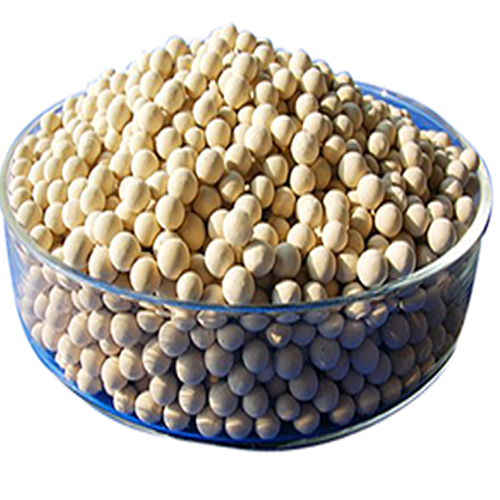
How a Molecular Sieve Works
The material used in an industrial molecular sieve has small uniform pores. When other substances come in contact with the molecular sieve, the molecules that are the right size to fit in the pores will be adsorbed. The molecules that are too large to fit will not. Molecular sieves function at the microscopic level; therefore their sizes are measured in angstroms. Pore sizes 3Å and 4Å will adsorb water while larges sizes remove larger hydrocarbons.


Molecular Sieve using raw Materials
In a strictly scientific sense, many regular desiccant dehumidifiers like lime, clay and silica gel also work by filtering molecules of water vapor, but marketable molecular sieves are made of synthetic crystalline alumina silicates. Unlike absorbents found in nature, the mechanism of pore size during manufacture produces selective adsorption characteristics.
The Benefits of Molecular Sieves
Molecular Sieves adsorbents usually adsorb the water much quicker than other adsorbents & same they can decrease the humidity to a much lower level than the standard silica gel. they are also more effective than natural adsorbents for applications that exceed normal room temperature when correctly used they can be effective in reducing water molecules as low as 1ppm in specialized containers or to 10% comparative humidity in packaging.           
Molecular sieves typically adsorb water much faster than other desiccant air dryers and they can reduce the humidity to a much lower level than the standard silica gel. They are also more effective than natural desiccants for applications that exceed normal room temperature. When properly used, they can be effective in reducing water molecules as low as 1ppm in specialized containers or to 10% relative humidity in packaging.
Molecular sieve regeneration
While some molecular sieves that remove alcohols and aromatic hydrocarbons use pressure to regenerate the sieve, the molecular sieves that are used for water-adsorption are usually regenerated by heating. For most industrial purposes, these temperatures range from about 250° to 450°F, similar to baking temperature settings for a standard kitchen oven.

Drawbacks of Molecular Sieves

Prices are higher than other forms of adsorbents; however, molecular sieves are also more effective. The actual price per unit and final value will depend upon other factors such as the volume to be dehumidified and the level of dryness needed.
Molecular sieves, while approved for use with pharmaceuticals in Europe,
Have not been approved by the FDA for either foodstuffs or pharmaceuticals in the US.
Molecular sieves have excellent capacity for and rates of adsorption, even at elevated temperatures. They are the only desiccant that is selective for molecular size.
Prices are higher than other forms of adsorbents; however, molecular sieves are also more effective. The actual price per unit and final value will depend upon other factors such as the volume to be dehumidified and the level of dryness needed.
Molecular sieves, while approved for use with pharmaceuticals in Europe,
Have not been approved by the FDA for either foodstuffs or pharmaceuticals in the US.
Molecular sieves have excellent capacity for and rates of adsorption, even at elevated temperatures. They are the only desiccant that is selective for molecular size.

Things to Know While Purchasing Molecular Sieves for medical oxygen concentrator.!

Molecular sieves are used to remove water formed in chemical reactions, the water being capable of modifying the equilibrium of the said reaction. In the pharmaceuticals and fine chemicals industry, molecular sieves are typically used in the synthesis reaction of molecules. This is done to improve the yields and the quality of the final product.

A constantly-growing patient population needs an oxygen-rich air supply close at hand. Whether static or portable, these oxygen concentrating devices operate by passing ambient air through a molecular sieves column. The distinctive properties of the column then separate oxygen from nitrogen in the ambient air and release a flow of up to 94% pure oxygen.
For this application, Sorbead India has supplied the various Grades of Molecular Sieve (Molecular Sieve 3A, Molecular Sieve 5A, molecular


Sieve4A, and molecular Sieve13x) especially for medical oxygen concentrator designs. 

4 Major motives to choose Sorbead India Molecular Sieves


 1..Product consistency: We have produced over a million pound molecular Sieves for medical use over the last 10 years with outstanding results.

         2.Reliable &recognized: We are relied upon every day for molecular sieves by major OEM’s.

4.    3.Technical expertise from product to application: our dedicated sales & marketing team is ready to assist with your all technical issues.
 4. Innovation capabilities: if you have new ideas let’s discuss, our sales & marketing staff might be able to support in developing the right sieve for your new idea

Focus on some technical concepts while purchasing molecular Sieves for Medical Applications.

The separation of the various gases from ambient air is accomplished by a porous material known as a synthetic zeolite, which is also known as "molecular sieve". A combination of silica and aluminum organized into a crystalline network, zeolites selectively trap nitrogen molecules in their nanometre-scale cavities, while letting oxygen and other molecules through.

The working standard is the same for medical as with industrial oxygen systems where the air is passed through a set of columns to produce oxygen at 93-95% of purity.


The major difference for medical applications is that the feed flow rate of air being treated is significantly lower and the adsorption cycle time (time for adsorption before switching to desorption) is somewhat shorter than with many industrial systems.

Friday, 19 May 2017

Molecular Sieve 3A for drying various objects


Understanding Molecular Sieve

Molecular Sieves are one of the most commonly used desiccants for removing moisture from storage and packaging facilities. When we talk about molecular sieve, what comes to mind are Silica Gel balls/beads having uniform-sized pores. Silica Gel is one of the most well-known forms of Molecular Sieves. Others include Activated Carbon and Activated Alumina. The uniqueness of Molecular Sieve Desiccant is that it has all same-sized holes, which allow only molecules of the same size as the pores to pass through. The bigger molecules will not pass through as their size is different from the pore size of the molecular sieve. In this manner, molecular sieves absorb all the moisture present in packaging. Also Check: Want to buy Activated alumina for Transformer Oil Filtration then contact here.

The main use of molecular sieves is in chromatography, the process by which different components of any given mixture are separated for further analysis. In the chromatography process, the given mixture moves through a bed of porous semi-solid substance, (the molecular sieve) where the separation process takes place. As the mixture moves forward, the components with more molecular weight are absorbed first by the molecular sieve. The lesser weighing molecules are always absorbed later. This is how in chromatography, the high absorption powers of molecular sieves are successfully put to use. 

Molecular Sieves are divided into various categories, depending on their usage. These include 3A, 4A, 5A, 10A, 13X among others. In this article, we will get to know more about Molecular Sieve 3A.

Molecular Sieve 3A- An Introduction

Molecular Sieve 3A gets its name on the basis of its pore size. This type of molecular sieve has pores the size of 3 Angstrom ( the measurement used for the pore size of molecular sieves) and will allow only the passage of water molecules with lesser size. So when it is placed alongside packed items, Molecular Sieve 3A will absorb all the vapour molecules and not allow dirt and other molecules with pore size more than 3A to pass through. Molecular Sieve 3A desiccant suppliers are witnessing high demand for this desiccant, given its high absorption capabilities. 

MolecularSieve is generally an alkali metal aluminosilicate, having the potassium form of type A crystal structure. The pore size of 3 Angstrom is generated when some of the sodium ions from the 4 Angstrom sieve get replaced by potassium ions. Manufacturers of Molecular Sieve 3A advocate more use of this desiccant as it has regular high adsorption rate, high contamination resistance, greater crushing strength and more cyclic times in comparison to other desiccants. Molecular Sieve 3A is also successful in increasing the shelf life of many packed items like food products and pharmaceutical items because of the above-mentioned benefits. Also Check: Best Guidelines for water filtration using activated alumina balls 

3A molecular sieve suppliers across the country like Sorbead India advise potential clients to buy molecular sieve 3A from well-known companies so as to get the only best possible Molecular Sieve 3A. It is very important that only the best quality Molecular Sieve 3A be used to absorb all moisture molecules from the surroundings.
<\head>

Monday, 13 October 2014

Non Toxic and Highly Absorbents Molecular Sieves


Molecular sieves are said to be those type of desiccants which although has almost same appearance with that of silica gel but has different completely different properties as compared to silica gel. This desiccant is produced synthetically with the help of metal amino silicates. Molecular sieves are absolutely safe to use with the food items as it is absolutely nontoxic but at the same time are highly porous. It appears to have a pinkish color, tiny opaque beads which have several internal cavities, connected with each other with the help of internal window openings.

13X Molecular sieve


The other type of desiccant is dehydrated ethanol. Ethanol dehydration means a process where the water molecules or something equivalent to water molecules are removed from the substance. Ethane and water is produced by dehydrating ethanol by heating it over certain temperature with sulfuric acid. The vapors of ethanol can be easily dehydrated by passing any type of heated catalyst, which will produce ethane gas. This process is also called as ethanol drying.

more detail click on this: Ethanol Dehydration Process withMolecular Sieves

Tuesday, 30 September 2014

Ethanol Dehydration Process with Molecular Sieves

These sieves are made available in the form of beads, pellets and powder foam that can be used for ethanol dehydration, natural gas adsorption and purification process. When we talk about high water adsorption capacity, strong crushing structure, high mass transmission efficiency, these sieves are the best choice. These adsorbents have more than one cyclic process times and more durability involving regeneration features improves more efficiency and longtime adsorption capacity with having more effective then activated alumina and silica gel.

Molecular Sieves for Ethanol Dehydration Process
These desiccants have a high adsorption quality. This quality is bought by the intricate network of pores and also empty cavities in which moisture can be absorbed. These sieves are available in various configurations like 3X, 4X, 5X, 10X. The higher the numerical value, the better is the moisture absorbing capacity. Molecular sieve 3a is the potassium based molecules having opening pore size about 3Ao of “A” type crystalline structure and also it cannot absorb any molecules more than its pore size. The chemical name of this desiccant is synthetic sodium potassium or calcium aluminosilicate.

These desiccants find extensive use in various commercial and industrial processes. Molecular sieves are used in dehydration of many kinds of liquids like ethanol. It is also used in the separation and purification of these liquids. Oil purification is another such area where these sieves are used extensively. These are also used in olefin drying. The feed that comes from polymer plant is also dried using molecular sieves. It is also recommended for drying unsaturated hydrocarbons and highly polar compounds such as methanol and ethanol. The molecular sieve 3a structure is particularly effective in dehydrating the inner space of insulating glass windows as well as refrigerant gases. The moisture absorbing property of these sieves is also very effective in dehydration of cracked gas, ethylene, ethyne, propylene, butadiene, natural gas or methane, oxygen remove from air and also the air itself. It is also used in drying N2-H2 mixtures made by cracking of ammonia.

Tuesday, 23 September 2014

Characteristics & Uses of Molecular Sieves

Molecular sieve is a porous solid, usually a synthetic or a natural zeolite derived from alumina silicates with a different attachments of compounds like sodium, Calcium, Potassium that separates particles of molecular dimension which are defined to its pore diameter openings like 3A,4A,5A,10A. A true Molecular sieves are hydrated metal alumino-silicate compounds with well-defined crystalline structures. 

The silicate and aluminates groupings form three-dimensional crystal lattices surrounding cavities in which the metal ions and the water molecules are loosely held. Channels run through the entire crystal, interconnecting the cavities and terminating at the crystal surface. Upon heating above 200 deg C, the zeolites lose their inbound water content with little or no change in their crystal structure. The dehydrated Molecular sieves can reversibly absorb water or other molecules that are small enough to pass through the channels or pores. The metal ions are also readily replaceable by oterionic units of similar charge and size..

Molecular Sieves
Molecular Sieves

 The sizes of a 4 to 8-mesh sieve is normally used in gas phase applications, while the 8 to 12-mesh type is common in liquid phase applications. The powder forms of the 3A, 4A, 5A and 13X Molecular sieves are suitable for specialized applications. Long known for their drying capacity (even to 90°C), molecular sieves have recently demonstrated utility in synthetic organic procedures, frequently allowing isolation of desired products from condensation reactions that are governed by generally unfavorable equilibria. These synthetic zeolites have been shown to remove water, alcohols (including methanol and ethanol), and HCl from such systems as ketamine and enamine syntheses, ester condensations, and the conversion of unsaturated aldehydes to polyenals.

Molecular sieves are used for drying gases and liquids and for separating molecules on the basis of their sizes and shapes. When two molecules are equally small and can enter the pores, separation is based on the polarity (charge separation) of the molecule, the more polar molecule being preferentially adsorbed.

3A type with potassium base is widely used in commercial dehydration of unsaturated hydrocarbon streams, including cracked gas, propylene, butadiene, acetylene; drying polar liquids such as methanol and ethanol. Adsorption of molecules such as NH3 and H2O from a N2/H2 flow. Considered a general-purpose drying agents in polar and nonpolar media.

Type 4A Molecular Sieve is most preferred for static dehydration in closed liquid or gas systems, e.g., in packaging of drugs, electric components and perishable chemicals; water scavenging in printing and plastics systems and drying saturated hydrocarbon streams. Adsorbed species include SO2, CO2, H2S, C2H4, C2H6, and C3H6. Generally considered a universal drying agent in polar and nonpolar media.

Commercial gas drying, air plant-feed purification (simultaneous H2O and CO2 removal) and liquid hydrocarbon/natural gas sweetening (H2S and mercaptan removal- sweet smell ) which is well taken care by 13X type.


If you plan to remove or separation of normal paraffin’s from branched-chain and cyclic hydrocarbons; removal of H2S, CO2 and mercaptans from natural gas. Molecules adsorbed include nC4H10, nC4H9OH, C3H8 to C22H46, and di-chlorodifluoro-methane (Freon 12®) then the most recommended product is a 5A type. Which is widely accepted.